.png)
Courthouse Wedding vs. Private Officiant: What’s the Difference?

Planning a wedding comes with dozens of choices, but one of the earliest decisions you’ll make is who will actually marry you.
When couples picture step-away alternatives to rigid institutional settings or traditional houses of worship: whether looking for a secular ceremony, blending two distinct faith backgrounds, or planning an intimate elopement- two primary choices usually come up: booking a quick date at city hall or hiring a private officiant.
While both options result in a legally binding marriage, the overall experience, flexibility, and emotional weight of each couldn’t be more different.
Here is everything you need to know about a courthouse wedding versus a private officiant so you can choose the ceremony that best matches your vision, schedule, and values.
What Is a Courthouse Wedding?

A courthouse wedding is often referred to as a civil ceremony. It is a brief, legal marriage conducted by a government official, such as a judge, clerk, or justice of the peace.
A courthouse wedding ceremony takes place at a local government building, municipal court, or city hall. The main purpose behind choosing these ceremonies is the legal efficiency that they bring with them. The officiant follows a standardized script provided by the state, processes your legal paperwork, and registers your marriage with local authorities.
What Is a Private Officiant?
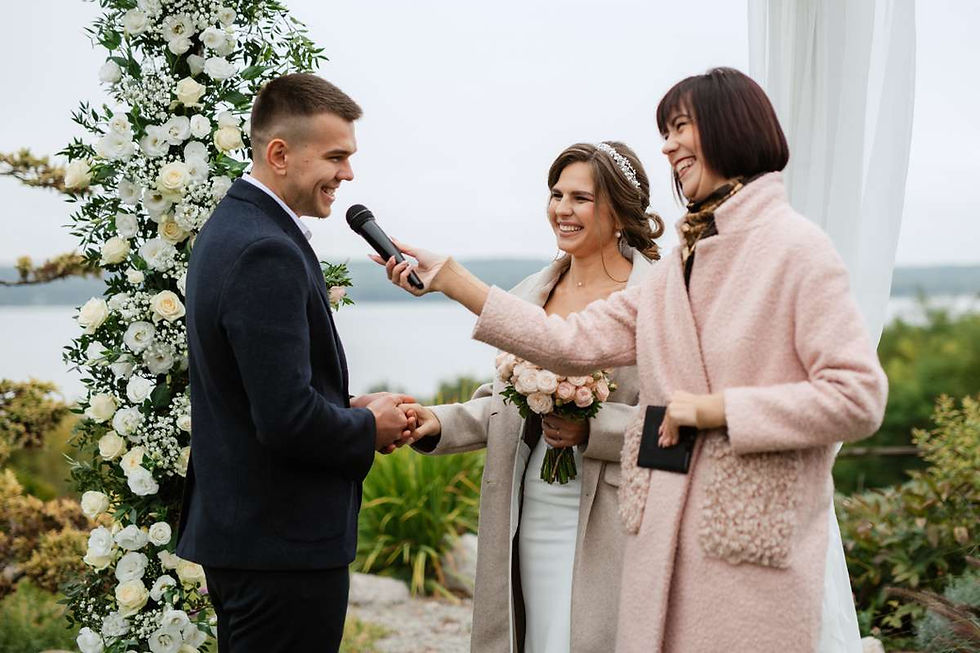
A private wedding officiant is a licensed or ordained professional hired independently by a couple to design, write, and lead their wedding ceremony.
Unlike a municipal judge, a private officiant works directly with you long before the wedding day. They help you craft a personalized wedding ceremony that reflects your personal love story, incorporates custom rituals, honors cultural or multi-faith roots, and sets the exact tone you want.
Whether you are planning an intimate back-patio gathering, a coastal California elopement officiant service, or a multi-faith celebration, a private officiant provides complete control over your ceremony.
Courthouse Wedding vs. Wedding Officiant: What Are the Key Differences?
It is needless to say that both options make your marriage official in the eyes of the law; their approach to your wedding day differs across five main categories:
Feature | Courthouse Wedding (Civil Ceremony) | Private Wedding Officiant |
Location | City Hall, Municipal Court, or Clerk’s Office | Anywhere (Beach, mountain top, venue, home) |
Script & Content | Standardized, non-religious legal script | 100% custom-written around your story & beliefs |
Guest Limit | Strictly limited (often 2–10 guests max) | Flexible (from zero guests to hundreds) |
Schedule & Timing | Weekdays during business hours; strict time slots | Any day, any time, with zero rush |
Personalization | Minimal to none; fixed vows | Endless options (custom vows, cultural rituals, multi-faith elements) |
What Are the Pros and Cons of a Courthouse Wedding?
Understanding the courthouse wedding pros and cons can help you decide if a quick civil ceremony aligns with your current priorities.
Pros of a Courthouse Wedding:
Budget-Friendly: Ceremonies conducted at the city hall are extremely cost-effective, usually requiring only a small administrative fee (typically under $100).
Minimal Planning: There are no flower arrangements, script revisions, or sound checks to coordinate.
Speed: The actual ceremony usually takes less than 10 minutes.
Cons of a Courthouse Wedding:
Lack of Personalization: You cannot change the script, choose custom readings, or alter the traditional ceremony structure.
Strict Guest Limits: Most courthouses strictly enforce small guest limits due to room capacity and security rules.
Bureaucratic Environment: You may share a waiting room with individuals taking care of civil fines, parking tickets, or court summons.
Limited Availability: Appointments for a courthouse wedding are usually limited to standard weekday business hours, thereby making weekend celebrations impossible at the location.
Why Do Couples Choose a Private Officiant Instead of a Courthouse?
Hiring an independent officiant, means getting total creative freedom, cultural sensitivity, and peace of mind. Here is why a professional officiant wins over a city hall ceremony all the time:
1. You Get a Ceremony Built Around Your Unique Story
A judge will read a standardized form; nothing personal or emotionally relevant. However a professional officiant crafts a narrative. Your officiant takes time to learn your love story, your shared values, and your vision for the future, weaving those elements into a warm narrative that feels completely like you.
2. Full Flexibility for Location and Timing
If you wish for a dreamy wedding setting or want to exchange vows at sunrise on a Santa Barbara beach, under the pines in the Sierra Nevada mountains, or in your own backyard on a Saturday afternoon. A private officiant travels to your dream location at the exact time you prefer.
3. Inclusion of Multi-Faith, Cultural Rituals, and Multilingual Needs
If you want to weave together two different traditions—such as combining a handfasting ritual, lasso ceremony, unity candles, or specific readings—a private officiant seamlessly integrates these details without forcing you into one specific religious box. Furthermore, bilingual officiants can present your ceremony in multiple languages (such as English, Spanish, or Russian) so all your guests feel included.
4. A Simple “Sign and Go” Option Is Still Available
If you want to keep things even simpler than a courthouse wedding and want to avoid city hall, many private officiants offer a sign and go wedding service. Your officiant can meet you at a local coffee shop, park, or residence, verify your license, complete the legal marriage pronouncement, and file the legal paperwork for you without the courthouse hassle.
Is a Justice of the Peace the Same as a Wedding Officiant?
When researching wedding officiant vs justice of the peace, it is easy to confuse the two terms, but they hold distinct roles:
A Justice of the Peace is a legal magistrate appointed or elected by a local government. Their authority comes directly from the civil court system, and their primary focus is legal administration.
A Wedding Officiant is a private professional who has been authorized by law to perform marriage ceremonies. Their focus is client experience, storytelling, ceremony customization, and multi-faith or secular inclusivity.
While both have the legal authority to marry you, a justice of the peace can only operate within civic boundaries. However, a private wedding officiant has the freedom and flexibility to customize your ceremony based on your preferences.
How Much Does a Courthouse Wedding Cost vs. Hiring an Officiant?
Courthouse Ceremonies: Typically range from $50 to $150, excluding the cost of the marriage license itself.
Private Wedding Officiant: Fees generally range from $300 to $1,000+, depending on travel, the depth of customization, and pre-wedding consultations. A simple sign and go wedding package often falls on the lower end of that range.
While a civil ceremony may save you money upfront, opting for an officiant is an emotional investment that can help you accommodate everything you hold dear about your entire wedding day.
Which Option Is Right for You?
Choose a courthouse wedding if:
You prioritize legal simplicity and want your ceremony to be cost-effective.
You don’t want to get involved in the detailed intricacies of wedding planning.
You plan to host a larger, non-traditional celebration later and just need the legal formalities settled today.
Choose a private wedding officiant if:
You want to customize your vows, incorporate cultural traditions, or interfaith readings.
You are planning an outdoor wedding, home ceremony, or intimate elopement.
You want family, friends, or pets involved in your ceremony.
You prefer an inclusive, affirming atmosphere tailored specifically to your values.
Finding the Right Fit for Your Ceremony
All things said and done, your ceremony shouldn’t feel like an administrative chore or a generic template. It comes down to working with someone who listens first, understands your background, and brings a steady, warm presence to your wedding day.
At Universal Vows & Verses, you’ll always talk directly with me. There is no team of coordinators or last-minute substitutes involved. Whether you’re merging two cultural backgrounds, designing a secular ceremony in different languages, or navigating complex family dynamics, I craft every script from scratch so your vows land with genuine warmth and truth.
Frequently Asked Questions
Q: Can a private officiant perform a secular (non-religious) or interfaith wedding?
A: Yes. Professional officiants routinely perform completely secular ceremonies, interfaith blends, spiritual ceremonies, or multi-cultural celebrations tailored to your wishes.
Q: Do we still need a marriage license if we hire a private officiant?
A: Yes. Regardless of who leads your ceremony, you must obtain a valid marriage license from your county clerk’s office before your ceremony takes place. Your officiant will complete and sign it on the day of your wedding, then handle filing it with the state.
Q: How far in advance should we book a private officiant?
A: It is best to book your officiant 6 to 9 months in advance, especially if you are getting married during peak wedding season or planning a weekend ceremony.
Author: Olivia Burke

Hi, I'm Olivia! I officiate weddings, vow renewals, baptisms and blessings, and home blessings, and I write every single one from absolute scratch. No templates. No recycled lines. Just a lot of listening, an unreasonable amount of joy over other people's love stories, and the firm belief that your ceremony should sound like nothing but you.

Comments